People liked the post
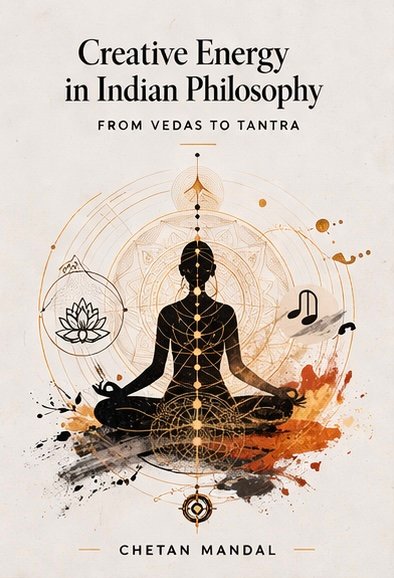
Creative energy has rarely been seen as just talent or artistic ability. Across multiple philosophical and spiritual traditions, it is understood as a fundamental life force, the same energy that drives creation, desire, expression, and consciousness.
In the Rigveda, kāma (desire) is described as the first impulse that gave rise to creation itself. This positions desire not as something to suppress but as a creative force at the root of existence.
This idea is not limited to Indian thought. In Greek philosophy, Eros was also understood as a primal force of creation, not just romantic desire but a generative impulse that moves life forward. Similarly, in certain Sufi traditions, longing (ishq) is seen as the force that drives both creation and spiritual connection.
Across traditions, desire is not separate from creation; in fact, it is its origin.
Yogic traditions expand this understanding through the concept of prana—the vital life force present in all living beings.
Texts such as the Hatha Yoga Pradipika describe how this energy can be refined into ojas, a more stable and elevated form associated with clarity, vitality, and awareness. This transformation requires discipline, focus, and conscious practice.
Similar ideas appear in other traditions. In Chinese philosophy, qi represents life energy flowing through the body, while in Japanese thought, ki reflects a comparable concept. These systems emphasise that energy can be cultivated, directed, and refined through practice.
Within many spiritual frameworks, what is often called “sexual energy” is not viewed as separate from creative energy.
In yogic and tantric traditions, this energy is part of Shakti—the dynamic creative force of existence. It can express itself physically, emotionally, or creatively, depending on how it is directed.
The idea is not suppression, but transformation.
This perspective aligns with psychological and philosophical views that see human drive, desire, and creativity as interconnected. The same energy that fuels attraction and reproduction can also be channelled into art, thought, and creation.
Rather than treating them as different energies, these traditions recognise them as different expressions of the same underlying force.
Tantric traditions take this understanding further by focusing on awareness rather than control.
The Vijnana Bhairava Tantra presents methods where intense human experiences—emotion, sensation, desire—are used as entry points into consciousness.
Instead of rejecting energy, tantra works with it.
This approach suggests that transformation happens not by avoiding experience, but by engaging with it fully and consciously.
Across all these traditions, one principle remains consistent:
Energy is neutral. Focus determines its expression.
Whether it becomes distraction, desire, or creation depends on how it is directed. In artistic practice, this becomes visible—raw impulse is shaped into form through sustained attention.
Music, movement, painting, writing—all emerge from the same process:
energy + focus = expression
Creative energy, sexual energy, and life force are not separate concepts – they are different expressions of the same underlying energy.
Across Indian philosophy and global traditions, the emphasis is not on suppressing this energy but on understanding and directing it.
When approached with awareness and focus, it becomes not just expression, but transformation.