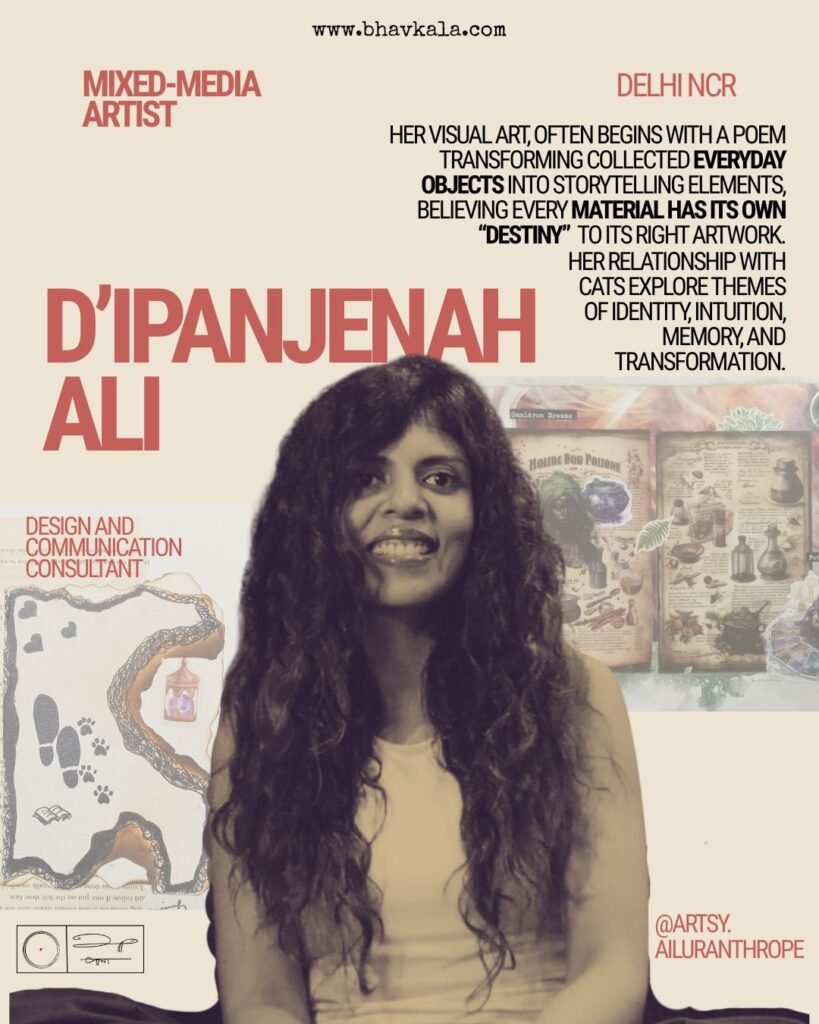
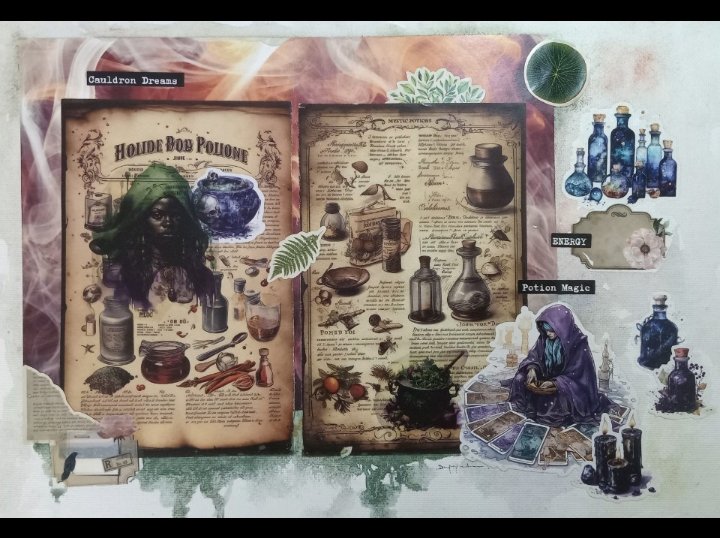
Today Dipanjaneha continues exploring illustration, mixed media, storytelling, sustainability, folklore, and experimental materials while developing new bodies of work inspired by mythology and symbolic narratives. For her, art is not confined to one medium—it is simply another way of understanding the world and herself.
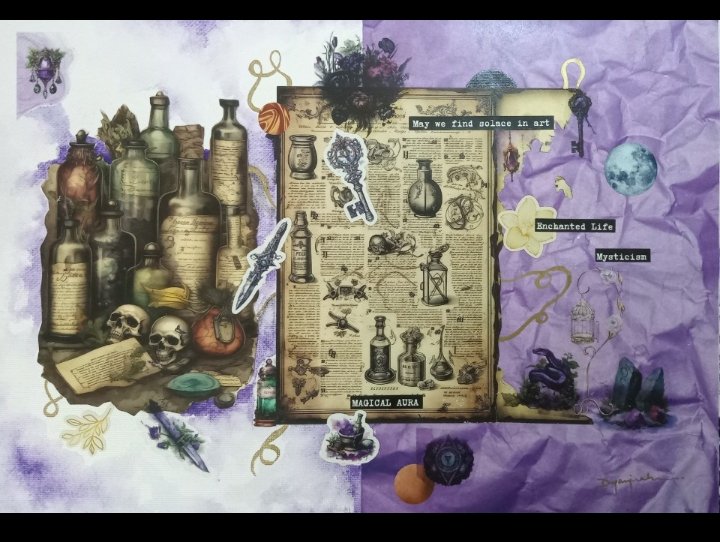
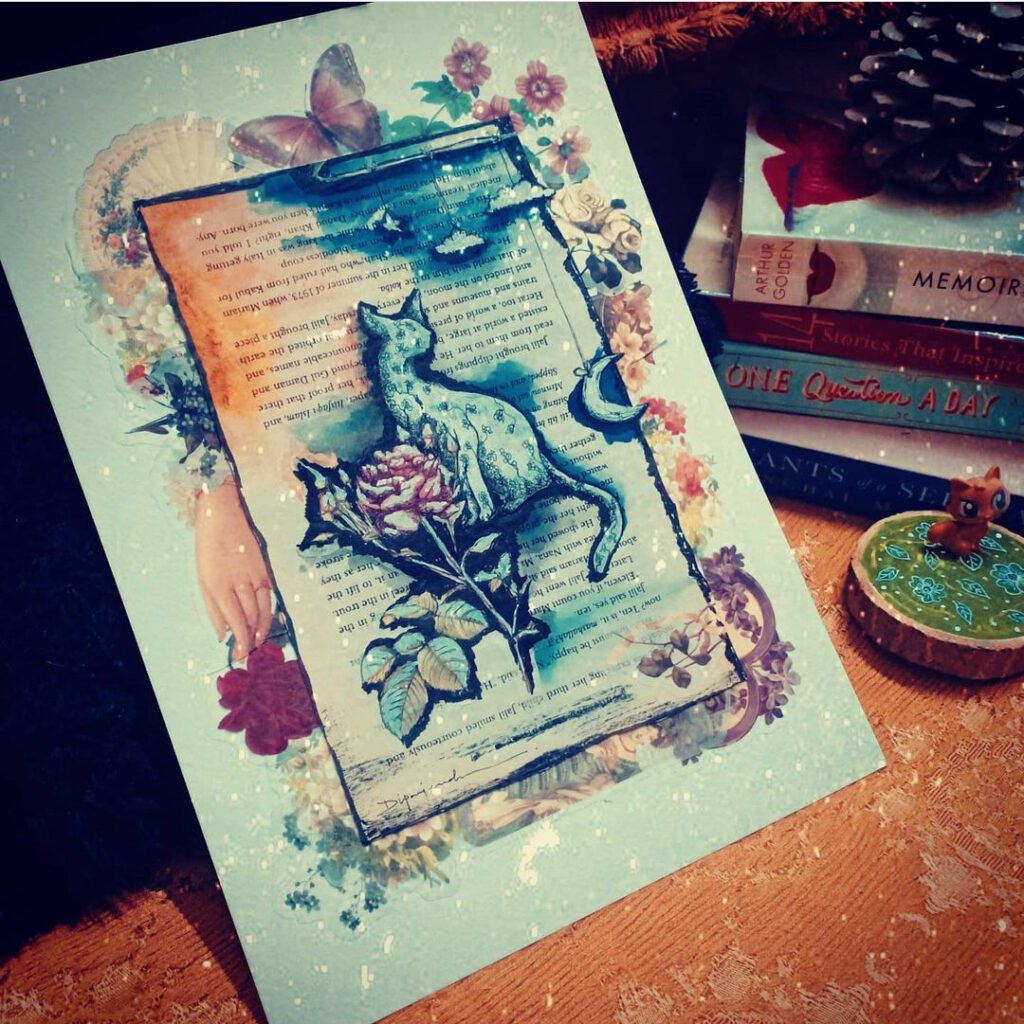
Every artwork begins with a question rather than a sketch. A piece of music, an old letter, a wasp nest, a poem, a treasured object, or even her cat can spark an entire visual world. Her practice is an ongoing conversation between illustration, collage, writing, texture, memory, and emotion—where ordinary objects become extraordinary stories.
Cats, witchcraft, forgotten legends, dreams, folklore, and transformation became recurring symbols in her work. Rather than illustrating myths, she used them as metaphors for identity, intuition, memory, grief, and personal growth—creating dreamlike worlds where reality quietly blends into imagination.
Writing has always been as important to her as painting. Poems, handwritten letters, fairy tales, mythology, and journal fragments naturally evolved into visual narratives. Instead of illustrating stories, she began allowing words and images to grow together—each completing the other.
Her studio slowly became a collection of memories. Seashells, feathers, buttons, paper scraps, forgotten stationery, and everyday objects found new meaning in her work. Sustainability became more than a concept—it became a creative philosophy where every discarded object carried the possibility of a new story.
As academic research and professional life took over, Dipanjaneha gradually stopped creating. It wasn't until she returned to her studio after nearly two years that she realised art wasn't simply something she enjoyed—it was something she needed. Creating became less about exhibitions and more about understanding herself.
Studying design transformed how she looked at creativity. She began questioning rigid definitions of art and discovered that ideas could exist through materials, stories, sustainability, objects, and experiences—not just paint on canvas. This shift completely redefined her artistic practice.
Dipanjaneha entered art school believing that painting was the only true form of art. Watercolours, oils, and classical techniques shaped her early practice, while quiet observation and writing became her language of expression. Even when words failed, art continued speaking for her.