
People liked the post
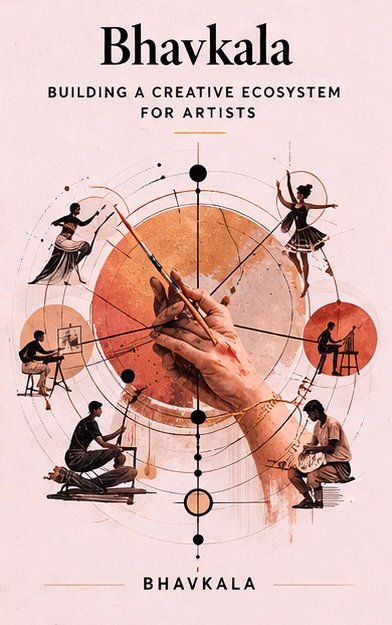
There is no lack of talent.
There is a lack of support.
Across India, many artists struggle not due to lack of skill but due to limited access to visibility and opportunities.
Traditional structures can be restrictive, with high entry barriers and limited exposure for emerging creators. As a result, many artists struggle to grow despite strong work.
Recent studies and market reports indicate a broader shift across creative industries, not limited to visual art. In the global art market, reports by Art Basel and UBS highlight the rapid growth of online sales and direct artist-to-collector relationships. A similar transformation is visible in music and film. Platforms like Spotify and YouTube have enabled independent musicians and filmmakers to distribute their work without traditional gatekeepers, while social platforms like Instagram and TikTok have become primary discovery tools for audiences. According to the International Federation of the Phonographic Industry, a significant share of music consumption now comes from digital streaming, where independent artists are gaining visibility alongside major labels.
This shift is also reflected in audience and collector behaviour. Research from Hiscox and contemporary art market analyses show that collectors increasingly prefer discovering and purchasing work directly from artists online, valuing authenticity, accessibility, and personal connection over traditional gallery validation. Similarly, digital audiences today are more likely to follow individual creators rather than institutions, engaging with their process, story, and identity. The rise of OTT platforms has further expanded opportunities for independent filmmakers to reach global audiences without relying solely on traditional distribution systems. Together, these shifts reflect a larger decentralisation of creative industries, where visibility, distribution, and success are increasingly driven by self-representation, digital presence, and direct audience engagement rather than institutional control.
As audiences begin to move closer to independent creators, the need is not just for platforms but for spaces that bring artists and audiences into real connection, visibility, and opportunity.
Bhavkala is a storytelling-led platform for the creative and collaborative economy of South Asian independent artists, built to support artists not only in sharing their work, but in sustaining their practice.
It approaches this through multiple formats.
Through artist features, the Maker’s Alive Podcast, and the curated artist timeline at the Bhavkala Collective section on the website, we work closely with artists to present their journeys, process, and work in a way that builds visibility and deeper audience engagement.
This becomes especially relevant for artists who are independently building their presence and require structured communication and reach.
At the same time, Bhavkala extends beyond digital storytelling.
Through its shop and exhibition initiatives, including the Bhavkala Collective, it creates opportunities for artists to present and sell their work directly to audiences. These collaborations are built in partnership with artists, allowing them to access platforms for both visibility and sales without being limited to traditional gatekeeping systems.
The Bhavkala Collective further explored a non-commissioned, community-driven approach, where artists were able to directly benefit from audience interaction, visibility, and continued opportunities beyond the event itself.
In a space where digital visibility is often temporary, Bhavkala focuses on creating continuity—through storytelling, collaboration, and access to real opportunities.